


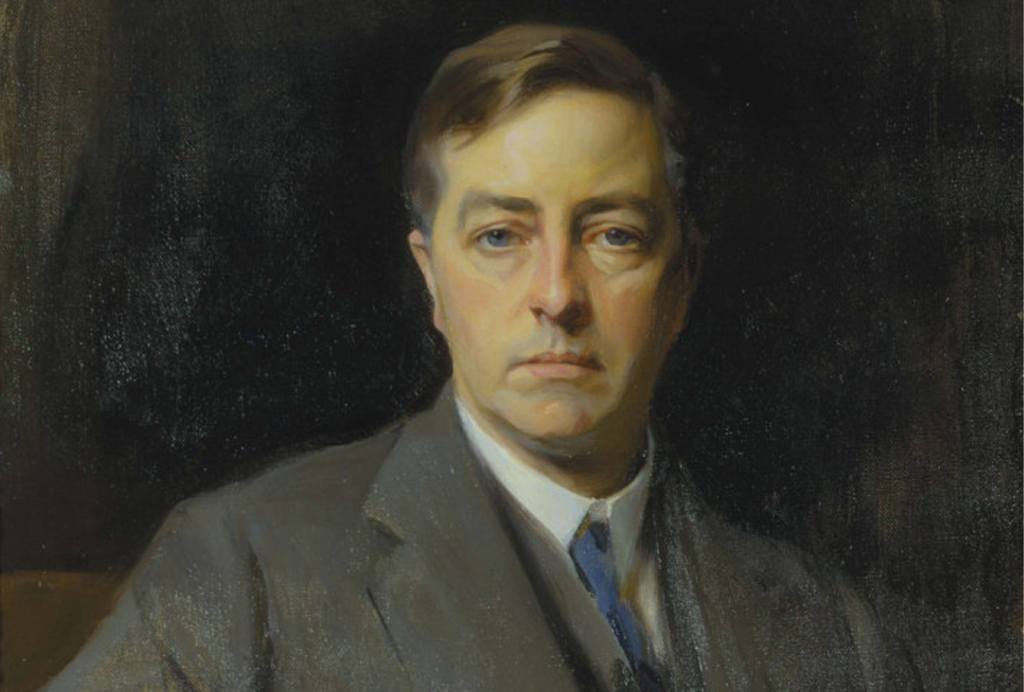
Abstract: Sir James Jeans, an astronomer of note in the early twentieth century, is overlooked and understudied—considering his popularity, high sales of his books, and his science communication work during the interwar period. Given his importance in the early development of both astrophysics and philosophy of science as academic disciplines and his interwar apologetics, it is unfortunate that his contribution (along with Eddington’s) was overshadowed in the years following 1945. Here we explore the complex reasons for that shift. One such reason is the fact that Jeans was challenged vigorously by Bertrand Russell, Susan Stebbing, C. E. M. Joad, and others. We look at his work on the surprising effectiveness of mathematics and call for a reappraisal of his contribution.
Sir James Hopwood Jeans (1877–1946) is a significant astrophysicist of arguably the most explosive period in the history of physics but remains unheralded against the higher profiles of Einstein, Planck, and others. His achievements rank among the highest one could reach and his popularity on both sides of the Atlantic was immense during the 1930s and 1940s in particular. His popular books sold in astonishing numbers for the time and would compare favourably with the best sellers of today’s science communication. The years following the First World War saw perhaps the greatest shift in the history of the physical sciences, as relativity, the new quantum theory, and Big Bang cosmology all arrived within a decade. The need for skilled communicators and interpreters for the sciences as well as for the public was immense, and Jeans sold more books than many popular novelists. A gifted mathematician, popular lecturer, prolific writer, and highly successful scientist, Jeans was certainly a man for his time.
Along with Sir Arthur Eddington,[1] his arch-rival and contemporary, Jeans made vital contributions to astrophysics and philosophy of science yet publicly advocated theism. His writings opened a door to Christian belief at a time of great humanist upheaval and the growing popularity of Logical Positivism.
The question as to why currently his theistic writing is so unappreciated will be explored here. Regarding exposition of religion to the popular audiences of Britain and the United States, C. S. Lewis and G. K. Chesterton overshadowed his work over the course of time, yet he was a household name for almost two decades, quoted by both of the above authors and by many others in the science and religion debate.
Jeans the Academic
Jeans studied mathematics at Trinity College, Cambridge. He was second wrangler and by 1901 was a Fellow of Trinity at the age of twenty-four. He became professor of applied mathematics at Princeton in 1904 and held this position until 1910 when he returned to Cambridge. Between 1923 and 1944, he was a research associate at the Mount Wilson observatory in California. Among his accolades he became a Fellow of the Royal Society in 1906, won its Royal Medal in 1919, was awarded the gold medal of the Royal Astronomical Society in 1922, was knighted in 1928, given the Order of Merit in 1939, and delivered the Christmas Lectures in 1933. He has craters on both the Moon and Mars named in his honour. His name is remembered in modern physics by the Jeans Length, Jeans Instability, Jeans Escape, and the Rayleigh-Jeans Law.
Jeans particularly excelled in applied mathematics[2] turning the advances in the field to problems in physics and chemistry before focusing more acutely on astronomy at the birth of astrophysics as a discipline. It is difficult to comprehend his relative obscurity given all the deserved accolades during his lifetime.
Jeans was a significant mathematician and astrophysicist, as his invitation to the first Solvay Conference in 1911 demonstrates. This was an invitation-only conference, focusing on addressing the biggest problems in physics, beginning with the original conception of the quantum theory. Present guests included Lorentz, Curie (the only female contributor), Poincaré, Planck, Lindemann, Einstein, Rutherford, De Broglie, and Sir James Jeans. He was invited also to the second Solvay Conference, held in 1913.
An Elusive Personal Faith
Regarding religion, undoubtedly Jeans is a figure who is difficult to pin down. Disputes emerged throughout his later life and posthumously as to exactly what his beliefs were. We shall point to several lines of interest.
In discussion with Dr Christopher Jeans, the son of Sir James, it is clear that the Jeans family had a nominal church life. They played little role in the life of the local church, attending mostly for weddings, funerals, Christmas, and Easter services. Jeans was a vocal academic but otherwise relatively private.
Yet Christopher himself writes that “religion was beyond doubt” for Sir James “until the end of his life, yet he never had an anthropomorphic view of God.”[3] Personal faith in a personal God in the traditional Protestant sense had little appeal to him. Milne, Jeans’ biographer, says very little on Jeans’ religious views except in his discussion of The Mysterious Universe, where he states that he believed Jeans to be sincere in his view that a designing, mathematical Creator existed.[4]
Jeans knew his Bible and the Thirty-Nine Articles, but that was not too unusual for a public school and Cambridge educated man.[5] He appears to have lost appetite for a traditional faith at a young age, at the same time as science captured his imagination. As Christopher Jeans explains in his biography of his father: “in childhood he was uncomfortable about Christian myths on the origin of the world and of other natural events. He preferred to develop his own interests.”[6]
From Jeans’ early scientific writings, we glean no hint of interest in religion. His time in the USA at Princeton seems devoid of any religious engagement. His early flurry of debate and activity with the Royal Astronomical Society, Cambridge, and the Royal Society was driven by a passionate advocacy for his scientific positions rather than any wider philosophical interest.
Jeans the Populariser
Jeans returned to England in 1910, when he became Stokes Lecturer in Mathematics at Cambridge. He held this position for only two years as he resigned from full-time, paid academic work in 1912, but he did continue as an independent researcher.[7] He published forty-two scientific papers from the start of 1915 until 1928. Why did he turn to popularisation?
A number of explanations have been offered. Arthur Miller’s Empire of the Stars[8] is a book on the tussle between Eddington and Chandrasekhar over black holes. It is semi-popular, well referenced in part, but with a high speculative quotient. Miller argues that Jeans returned to Cambridge in 1910 when the holder of the Plumian Professorship of Astronomy, Sir George Darwin, was on his deathbed, believing that he was next in line. As a result of what Miller describes as Machiavellian internal politics, the chair went to Eddington instead, then merely a junior fellow. “Disgusted with academia, Jeans resigned.”[9] This does not accord with the chronology given by Crowther, where Jeans resigned in 1912 and Darwin did not die until 1913.[10]
Jeans’ first major popular works were The Universe Around Us[11] and Eos.[12] In each he waxes poetically on the new understanding of the vastness of the universe, its peculiarity and strangeness to human comprehension, and humankind’s place within it. The strength of his writing in evoking emotion and wonder aided his popular works and led to a stream of invitations to give lectures, including the prestigious Christmas Lectures at the Royal Institution.[13] Little hints of theological thinking come through in these initial works that gave expression to his later, more concrete mathematical deism. A good example is the following in Eos: “The picture it sees may be merely a creation of its own mind, in which nothing really exists except itself; the universe which we study with such care may be a dream, and we brain-cells in the mind of the dreamer.”[14]At first glimpse, this seems poetic wonder. His later works, however, developed this perspective into the philosophy and theology for which he was to be so criticised.
David Wilson’s assessment of Jeans’ description of God is that there was “nothing especially Christian about Jeans’ Mathematical Thinker.”[15] But this is not unusual in the history of Christian apologetics, when arguing for the existence of a God has often been a preliminary step before moving towards a Christian understanding of the Deity. Much as with Eddington’s Quaker assessment of the divine and reticence to defend anything other than a minimalist theism, Jeans’ theology was characterised by a repulsion to doctrine. This only grew with the new physics with which Jeans’ writing engaged during the 1930s and 1940s. Wilson surmised that “Christianity was evidently not satisfactory for the modern world.”[16]
Jeans’ general attitude to faith is marked by scepticism. In his Lorimer Lecture, explaining competing positions on the universe, Jeans finishes by saying that “You may pin your faith to anyone you please, but you must not be certain about any. Personally, I feel very disinclined even to pin my faith to any.”[17] Instead, Jeans’ writing style was an exercise in musing out loud. Readers can often feel as if they are part of a conversation about life, meaning, and the universe that Jeans is having with himself.
Jeans the Idealist and His Critics
What did attract Jeans to the idea of the divine was mathematics. As Eddington, Einstein, and others were being drawn philosophically to both idealism and a mathematical structuralism, Jeans was very much present in the same philosophical camp. He parted company with Eddington over God’s being a mathematician, and instead joined Einstein in a functional deism. Wilson describes his thinking as follows: “Might not our individual minds be like this, merging together in ‘a universal or Absolute mind.’ ‘In brief,’ Jeans declared, ‘modern physics is not altogether antagonistic to an objective idealism like that of Hegel’.”[18]
His philosophy was seen as too theological and sloppy by L. Susan Stebbing,[19] C. E. M. Joad,[20] and Bertrand Russell.[21] For example, Joad commented that it seemed that Jeans thought that the only possible alternative to the universe being like a mechanism was it being like a thought. Joad goes on to argue that Jeans’
conclusions are based less upon a critique of the nature of our knowledge of the physical world as revealed by an examination of the physiological machinery of perception and of the limitation of scientific method than upon certain considerations suggested by physics and astronomy with regard to the evidence of design in the universe as a whole, and the nature of the design which he is thereby led to infer.[22]
Joad generally but not always notes the differences between Jeans and Eddington, being more blunt about Eddington’s idealism. He detects five different versions of idealism in Eddington’s two books, describing the first three as distinctly Kantian in type, the fourth as perhaps more reminiscent of Descartes, and the fifth as borrowed from Berkeley.[23] In turn, Joad says Jeans’ position resembles the eighteenth-century rationalist philosophers Spinoza and Leibniz, although his preoccupation is mainly with the significance of mathematics.
After his thorough and fair dissection of Jeans’ comments on time, Joad points out that he went into such detail not because it is an important part of Jeans’ argument
but because it exemplifies the light-hearted way in which the writer plays (if I may use such a word to indicate the impression which the author’s treatment undoubtedly produces) with metaphysical notions. In this respect it is typical of many similar suggestions which are scattered up and down the book.[24]
Jeans was more than content to mix theology and philosophy and to flow between the two with little thought, which brought criticism from both camps.
Russell, in turn, who seems to have been confused by the approaches of Eddington and Jeans[25] (who in no way resembled the natural theologians of the 19th century), felt strong contempt at religious ministers across the world bolstering their apologetics with the writings of the two men. In The Scientific Outlook, he famously coined the paragraph which was much used by sceptics of the interwar period:
Sir Arthur Eddington deduces religion from the fact that atoms do not obey the laws of mathematics. Sir James Jeans deduces it from the fact that they do. Both these arguments have been accepted with equal enthusiasm by the theologians, who hold, apparently, that the demand for consistency belongs to cold reason and must not interfere with our deepest religious feelings.[26]
Jeans, however, does not appear to deduce religion this way in either earlier or later periods of his writings. Instead, he finds the new physics pointing away from materialism and towards a new idealism, and overall towards a less deterministic understanding of the physical world. Consciousness became more important to him given the privileged role of the observer in relativity and quantum mechanics. He came to conclude that the universe was written in mathematics in both language and structure, meaning that a creative mathematical mind grounded the universe. He did not see himself standing outside the British philosophical tradition, and very much in line with other accepted thinkers. Wilson writes:
Jeans judged his conclusions to be compatible with the idealistic systems of Berkeley and Hegel. Important here were the uniformity of nature, the constancy of existing things and the agreement among different minds. If phenomena were ultimately grounded in an entity independent of us—like Berkeley’s God or Hegel’s Absolute—uniformity, constancy and agreement could be explained. Though our knowledge is of mental concepts rather than material things, we did not just make up our own individual systems. We can agree because we study the same world of uniformity and constancy. On the other hand, our agreement could also depend on the similarity, and ultimate unity, of our respective minds.[27]
The Success of Jeans’ Popular Works
Jeans’ popular writing on astronomy and physics gathered pace into the 1930s. Many of his works published during that time touched on the science and religion debate. The Universe Around Us, first published by Cambridge in 1929, was one of the successes of scientific popularising in the interwar years. It grew in size through multiple editions. It was 370 pages long by its third edition. It is comparable in influence with Stephen Hawking’s A Brief History of Time, in an era when the reading public was smaller and disposable incomes were not so great.[28] The Universe Around Us is not Jeans’ most significant book concerning the science and religion debate, but occasionally he added comments of some significance, such as the following:
In part at least the answer would seem to be that many have begun to suspect that the astronomy of to-day, like that of Galileo, may have something to say on the enthralling question of the relation of human life to the universe in which it is placed, and on the beginnings, meaning and destiny of the human race.[29]
The first edition of 7500 copies published in September was sold out in October. By the end of 1929, 11,300 copies were sold following a reprint in November. The book was reprinted again in January 1930. It was updated with a second edition published in October 1930, which included details of the “new planet Pluto,” the rotation of our galaxy, the “apparent” expansion of the universe, and other additions and improvements to the text.[30] By December 1929, 40,000 copies of The Universe Around Us had been sold in Britain and the United States. A third edition appeared in November 1933, which contained further writing on the development of the understanding of the nature the atom, notably on the neutron and the electron, and at the other end of the scale further developments in the theory of the expanding universe.[31]
In the same way, The Stars in Their Courses, published in 1931, makes a nod towards a Creator rather than arguing for one. It is a shorter book than The Universe Around Us, with 150 pages of text plus 30 pages of appendices and star charts.
Jean’s most read book, The Mysterious Universe, published in November 1930, tackled the issue of God head-on and was a bestseller. The book was delivered first as The Rede Lecture at Cambridge University, on 4 November 1930. It was published on the following day, and by the end of December that year 70,000 copies had been sold in the UK. Whitworth says that the lucidity of Jeans’ exposition was critical. No wonder that the works of Jeans were translated into numerous languages and were especially popular in the USA. He was quoted in the press, interviewed by leading journalists, and asked to give radio talks and public lectures. By 1937, 139,000 copies of The Mysterious Universe had been printed by Cambridge University Press. This far outshone the 56,195 copies sold of Eddington’s The Nature of the Physical World.
These sales were very significant for their time, as Whitworth has demonstrated.[32] To give a comparison, Aldous Huxley’s contemporary novels Chrome Yellow and Those Barren Leaves were both initially printed in runs of 2,000 books, followed by reprints of 1,000 copies. The art historian Clive Bell’s book Civilisation was printed in a run of 1,500 copies, followed by two reprints of 1,000. To give further comparisons, Essays and Reviews published in 1860 sold 22,000 copies in two years, according to Desmond and Moore, which is a greater figure, they point out, than The Origin of Species achieved in twenty years.[33] These figures alone would make Jeans’ work worthy of a reappraisal, for the influence he had on popular apologetics. The above numbers provide evidence for C. S. Lewis’ statement in a BBC talk, published first in 1942, that “Many of you no doubt have read Jeans or Eddington.”[34]
One of the key messages of The Mysterious Universe is the same as Eddington’s The Nature of the Physical World, published two years before, in 1928, namely, that the science of the early twentieth century is more open to the possibility of a religious interpretation of life than the late Victorian science. Beyond that, Jeans’ approach diverges strongly from Eddington’s. Jeans was deliberately formulating an apologetic based upon a modified version of the design argument—that the mathematical orderliness of the universe points to a mathematically minded designer or architect of all existence. His slightly tongue-in-cheek literary style, while straightforward in a way that Eddington’s was not, should be taken as the voice of the author who knows he is venturing into the fields of theology and philosophy in which he is not an expert, expecting that people would disagree.
His most famous quotation, much reported in the press at the time, is the following: “We have already considered with disfavour the possibility of the universe having been planned by a biologist or by an engineer; from the intrinsic evidence of his creation, the Great Architect of the Universe now begins to appear as a pure mathematician.”[35] He goes on to say that “the universe is best pictured, although still very imperfectly and inadequately, as consisting of pure thought, the thought of what, for want of a better word, we might describe as the thought of a mathematical thinker.”[36]
The influence on Jeans of philosophical idealism is evident. This school of thought had largely lost favour with philosophers, but some physicists, including Eddington, found it appealing. The new physics gave lift to these previously unfashionable ideas, and Jeans simply blended it into his theological conclusions. An objection to one construction of idealism has been that if there is no one about in the quad of a college to observe the proverbial tree in the middle, how does it continue to exist? The Berkeleyan school answers that the tree subsists in the mind of God and Jeans introduces this idea (which Eddington does not use in his The Nature of the Physical World). Jeans goes on to say:
Modern science seems to lead, by a very different road, to a not altogether dissimilar conclusion … It does not matter whether objects “exist in my mind, or that of any other created spirit” or not; their objectivity arises from their subsisting “in the mind of some Eternal Spirit.”[37]
Jeans insists that he is not trying to introduce a thoroughgoing idealism at the expense of realism entirely. He argues that objective realities do exist, but people have no right to assume we can label them either “real” or “ideal.” The true label for which he argued vociferously was “mathematical.” Such a label does not imply anything as to what things are in their ultimate essence, but merely something as to how they behave. Accordingly, Jeans argues that if the universe is a universe of thought, then the creation must have been an act of thought. The finiteness of time and space compels those who consider these matters to picture the creation as an act of thought; the determination of the constants such as the radius of the universe and the number of electrons it contains imply thought, whose richness—Jeans argues—is measured by the immensity of these quantities. Not all those who consider these matters come to his conclusion.
Jeans’ Contributions to the Science and Religion Debate
Jeans, along with Eddington, made three notable contributions in his popular writings in the interwar years.
Firstly, he introduced the public to quantum theory and the new physics in a context that welcomed philosophy and theology. He not only explained how the physics of the previous century had been superseded, but helped the reading public understand the complexity of the new physics. He was an iconic figure for part of the middle of the twentieth century, on the way science and religion should engage with these two new concepts. He used his understanding of the universe as then portrayed by contemporary science to deliver a popular message to people unfamiliar with modern astronomy and physics, not just through his books, but aided by the mass circulation press and the wireless.
Secondly, he modelled a different form of engagement between science and religion. John Hedley Brooke has rightly pointed out the complexity of the topic in saying that “there is no such thing as the relationship between science and religion.”[38] This complex relationship is illustrated in the contrast between two periods of the second half of the nineteenth century, on the one hand, and the first half of the twentieth century, on the other hand. The major area of discussion between scientists and theologians in the late nineteenth century had centred on biology. The popular accounts of this discussion emphasised the conflict between the two areas of study, personified sometimes in the Oxford debate of 1860 between Wilberforce and Huxley. The popularity of Jeans and Eddington from the late 1920s helped to shift the popular debate from one mainly focused on evolutionary biology to one which included the new physics and astronomy. The fact that both were scientists and laymen rather than clerics also tended to emphasise a more cooperative view in the public’s mind. This might conceivably have helped some realise that when one scientist debated with another from different positions on the issue of the nature of the physical world—for example, Jeans with Russell—a simple conflict model was not adequate to describe the science and religion debate.
Finally, following this, he gave an alternative path for Christians to follow that did not involve six-day or young earth creationist views. The influence of Jeans and Eddington on the theology of the person in the pew was such a significant factor in the interwar years, that it helped shape the British perspective of the different approaches to creation seen on either side of the Atlantic (differences which persist to this day). Their popularity as authors, discussed by Whitlock in his article “The Clothbound Universe,” along with their exposure in the written press and the wireless, gave them an opinion-shaping impact.[39]
Should Jeans Be Given Credit for “the Unreasonable Effectiveness of Mathematics”?
Eugene Wigner is credited with the argument for God’s existence known as “the unreasonable effectiveness of mathematics,”[40] but perhaps we should credit Jeans with arriving there first.
Jeans is hardly the first thinker to extrapolate from the power of mathematics to a divine source. However, he sold popular works in tremendous numbers that promoted a specific vision of a divinely created order based on the new mathematical physics. He was less abstract than other authors and used the latest astronomy to convey this order across a universe of scale, in a way that had not been possible before. Furthermore, he advanced the power of relativity and quantum mechanics in a way that attacked a materialistic basis for atheism at the time. He was overthrowing one order and placing God on top of it using mathematics rather than apologetics or the preceding natural theology. As Wilson explains,
Whereas relations between the shadows might have been, for all we could have expected, totally unintelligible to us, they turn out to reflect mathematics “originally worked out by the mathematician in terms of abstract thought, practically uninfluenced by contact with the outer world, and drawing nothing from experience.” And this was not a case of our, Kant-like, imposing concepts on the observations, or else humans should always have had this mathematical view of nature. Nature’s essential mathematical structure existed independently of us, but it contained a mathematics that the human mind could think of by itself. This mathematical nature was more like a mental concept than like matter.[41]
Jeans’ vision of God as Mind with a capital “M” fits an idealism which repudiated materialistic atheism, whilst also appealing to the religious view of a created order that we might understand as created beings made in the image of God. For we can apprehend the order of the world even though we are creatures within it, in a fallen world. Much as with Eddington, Jeans drew on consciousness and free will within his philosophical arguments to cement his argument for a reasonable God. Wilson continues:
Jeans knew about the Mathematical Thinker through a design argument depending on the broadest conclusions about nature and on empirical conclusions about both free will and individuals’ agreement with one another. Moreover, through a possible pantheism, knowledge of the Mathematical Thinker offered, in turn, the prospect of a deeper understanding of nature than that provided merely by the immediate empirical study of nature.[42]
Wigner drew a straight line from this incredible ability of humans to comprehend the universe through the power of a mathematics that applies evenly across the universe. Einstein had seen this as incomprehensible, for how could a lowly, evolved creature develop a brain capable of uncovering the secrets of the universe? It appears that Jeans was attempting to make the same argument two decades before Wigner, but without the same success, for several reasons. Firstly, Wigner compiled his case succinctly into a single essay with a clear and eye-catching title. Jeans composed several books making the same case, but in smaller chunks. The fact that his aforementioned quotes from The Mysterious Universe became so famous and notorious shows the power of his case, but he made broad arguments drawing from multiple disciplines to point to his God as a mathematical mind. Secondly, Jeans became obscure following his death. The next generation of physicists and philosophers took the baton from Jeans’ generation and took it further with the next developments of quantum physics, such as those by Richard Feynman.
Jeans lost his fame and lustre quickly following the Second World War, and the fact that he died in 1946 did not help. Wigner was certainly the right articulator at the perfect time to place his idea in a memorable fashion, but Jeans deserves credit for articulating the case in his own way a generation earlier.
Conclusion
Sir James Jeans is an intriguing writer. At times, he appears relatively agnostic in his writings and other times he appears strongly theistic. There is no straight-line development in his views. His new iteration of a Mathematical Design Argument points, of course, to a “Great Architect of the Universe”[43] (a term borrowed from Voltaire) but not to a specifically Christian God. As has been said, this is not unusual in the history of Christian apologetics, where arguing for the existence of God has often been a preliminary step before moving towards a Christian understanding of the Deity.
Jeans, nevertheless, wrote successfully on science, philosophy, and religion at a time of great upheaval. He engaged the new physics and raised theological and philosophical questions about the nature of God and the universe based on the new data. His work resonated with the reading public and drew both praise and criticism. A prolific writer, his work deserves a new appreciation for what it accomplished in drawing attention to what, at the time, was a new understanding of a nondeterministic physics. Equally important is the fact that Jeans’ arguments about mathematical theism are still viable today, despite further advances in the sciences.
The authors report there are no competing interests to declare.
Received: 03/12/25 Accepted: 21/04/26 Published: 25/08/26
© 2026 The Author(s). This is an open access article under the terms of the Creative Commons Attribution-NonCommercial-ShareAlike (CC BY-NC-SA) licence.
[1] See Samuel McKee and Jon Reynolds, “A Brief Critique of Arthur Eddington’s Approach to Science and Religion in Light of Evidentialism,” Christian Perspectives on Science and Technology, New Series, Vol. 3 (2024): 276–289, https://doi.org/10.58913/XEUO9587.
[2] E. A. Milne, “Sir James Jeans, O.M., F.R.S.,” Nature 158 (1946): 542–543, https://doi.org/10.1038/158542a0.
[3] Christopher Vincent Jeans, Sir James Jeans: Scientist, Philosopher and Musician (Cosmogenic Press, 2021), 27.
[4] E. A. Milne, Sir James Jeans (Cambridge University Press, 1952), 159.
[5] On the Thirty-Nine Articles, see, for example, James Jeans, Physics and Philosophy, 22, 209. On the Bible, see, for example, James Jeans, The Stars in Their Courses (Cambridge University Press, 1947), 71, 82, 132.
[6] C. Jeans, Sir James Jeans, 27.
[7] This is the timescale given by J. G. Crowther, British Scientists of the Twentieth Century (Routledge & Kegan Paul, 1952), 104, and Milne, Sir James Jeans, 17, both writing in 1952. Williamson, writing Jeans’ obituary in The Journal of the Royal Astronomical Society of Canada 41 (February 1947), 41, suggests he stayed in Cambridge until 1929, possibly because he continued to publish serious monographs. The former timescale is to be preferred.
[8] Arthur I. Miller, Empire of the Stars (Little, Brown, 2005).
[9] Miller, Empire, 99.
[10] Crowther, British Scientists, 104.
[11] James Jeans, The Universe Around Us (Cambridge University Press, 1929).
[12] James Jeans, Eos: Or the Wider Aspects of Cosmogony (Kegan Paul, 1928).
[13] James Jeans, Through Space and Time: Royal Institution Christmas Lectures (Cambridge University Press, 2009).
[14] Jeans, Eos, 88.
[15] David B. Wilson, “On the Importance of Eliminating Science and Religion from the History of Science and Religion: The Cases of Oliver Lodge, J. H. Jeans and A. S. Eddington,” in Facets of Faith and Science: Volume 1: Historiography and Modes of Interaction, ed. Jitse M. van der Meer (University Press of America, 1996), 38.
[16] Wilson, “On the Importance,” 38.
[17] Sir James Jeans, The Depths of Space (The Lorimer Lecture) (Edinburgh University Press, 1938), 15.
[18] Wilson, “On the Importance,” 37.
[19] L. Susan Stebbing, Philosophy and the Physicists (Penguin Books, 1944).
[20] C. E. M. Joad, Philosophical Aspects of Modern Science (George Allen and Unwin, 1932).
[21] Bertrand Russell, The Scientific Outlook (Routledge, 2009).
[22] Joad, Philosophical Aspects, 50.
[23] Joad, Philosophical Aspects, 53.
[24] Joad, Philosophical Aspects, 51.
[25] A. Vibert Douglas, The Life of Sir Arthur Eddington (Thomas Nelson and Sons Ltd, 1957), 140.
[26] Betrand Russell, The Scientific Outlook (Routledge, 2009), 77.
[27] Wilson, “On the Importance,” 37.
[28] Stephen Hawking, A Brief History of Time (Bantam Press, 1988).
[29] James Jeans, The Universe Around Us (Cambridge University Press, 1929), 6.
[30] James Jeans, The Universe Around Us, 2nd ed. (Cambridge University Press, 1930), v.
[31] James Jeans, The Universe Around Us, 3rd ed. (Cambridge University Press, 1933), vi.
[32] Michael H. Whitworth, “The Clothbound Universe,” The Spectator (12 April 1935): 53–82.
[33] Adrian Desmond and James Moore, Darwin (Michael Joseph, 1991), 500.
[34] C. S. Lewis, Mere Christianity (Collins, 1952), 54.
[35] James Jeans, The Mysterious Universe (Cambridge University Press, 1930), 134.
[36] Jeans, The Mysterious Universe, 136.
[37] Jeans, The Mysterious Universe, 137.
[38] John Hedley Brooke, Science and Religion: Some Historical Perspectives (Cambridge University Press), 321.
[39] Whitworth, “The Clothbound Universe,” 53.
[40] Eugene Wigner, “The Unreasonable Effectiveness of Mathematics in the Natural Sciences,” Communications in Pure and Applied Mathematics 13, no. 1 (1960): 1–14, https://doi.org/10.1002/cpa.3160130102.
[41] Wilson, “On the Importance,” 36.
[42] Wilson, “On the Importance,” 38.
[43] Jeans, The Mysterious Universe, 134.