


Book reviewed by Neil Ormerod, March 2026
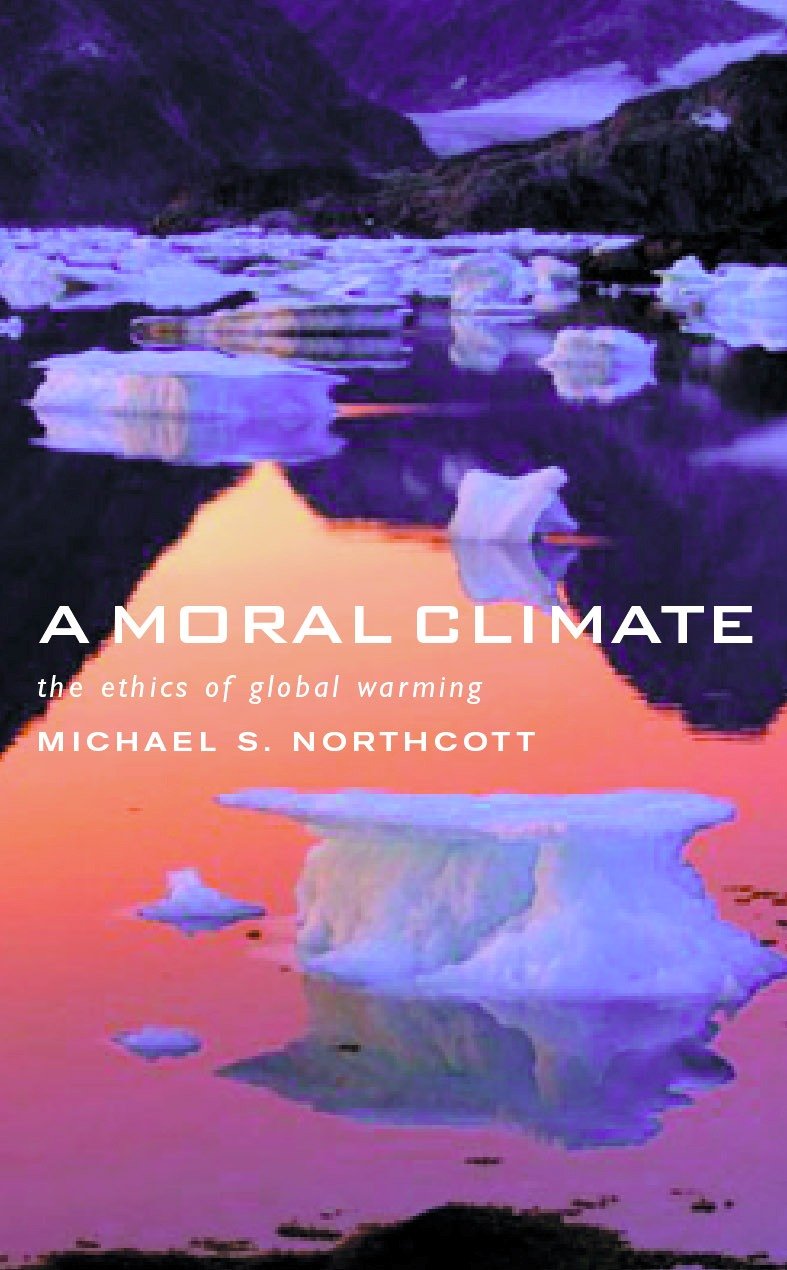
A Moral Climate: The Ethics of Global Warming
by Michael S. Northcott
Darton, Longman and Todd: 2007; 256 pages from the print edition (ISBN 0232526680)
ISBN 9780232528237, first edition, Kindle
AU$14 Kindle; AU$50 paperback
Michael Northcott is a leading figure in environmental ethics, currently emeritus professor at The University of Edinburgh. It seems odd reviewing his book, A Moral Climate, some twenty years after it was published, but it does offer the opportunity to see how the work has fared in the intervening years. A lot has happened globally since 2007, politically, economically, and technologically, that was not on the author’s horizon at the time of writing.
The work itself is a comprehensive analysis of the question of climate change, the multiple factors which contribute to greenhouse gas emissions, and the growing impact on communities around the world of our increasingly unpredictable weather. The chapters on all these various issues will often revolve around case-studies and biblical parallels drawn from Old Testament texts, particularly Jeremiah whom Northcott refers to as “the first ecological prophet in literary and religious history.” I did have concerns that this is an anachronistic reading of the texts, but he makes a strong case.
The introduction actually begins with a case study of Australia which he describes as a “microcosm” for what is happening globally. It is painted in apocalyptic terms, but as I look back over the past twenty years, I found his account not entirely accurate. One thing that certainly has changed is the attitude of our political leadership, from one of outright denial by successive Coalition governments of any link between carbon dioxide emissions and climate, to one where such denial is becoming close to political suicide.
The first chapter runs through the evidence and cause for climate change, not just in terms of the science, but the social and political forces which perpetuate increased emissions, such as uncontrolled consumerism, and a neoliberal economic ideology that believes in unlimited growth of our economy. These factors drive an economy that demands ever increasing consumption of energy—largely provided by fossil fuels, the major cause of climate change. Globalisation means we are increasingly isolated from the means of production, while the price paid by the communities that provide the energy we demand remains largely hidden.
The second chapter provides a case study from Tanzania on the impact there of climate change. Tanzania “is among the most vulnerable countries in the world to the effects of global warming” as climate change affects their agricultural production and while sea level rises threaten millions who live in coastal regions. As Northcott notes, “The strongest moral case for mitigating global warming is that it is already life-threatening to those who are least able to defend themselves, and have no responsibility for its causation.”
The third chapter tracks the emergence of our economy driven by the use of fossil fuels, from the first coal driven steam engines to our more contemporary reliance on oil and gas. “Oil remains the key natural resource that enables the global movement of goods and services, without which the contemporary global economy of trade without borders would not be possible.” This reliance impacts directly on our global politics as nations compete to secure access to this “precious” resource. Billions of dollars are spent globally by governments subsidising the search for new reserves, often to the detriment of nations “lucky” enough to have such reserves. “As Christian Aid notes, oil wealth appears not only to slow economic growth but actually to create poverty and increase wealth inequality” in these nations.
The fourth chapter deals with the failures of modern economic models to take environmental damage and the costs involved into account. These models remove from their analysis the ecological, social, and cultural nature of the various exchanges of goods and services, placing them behind a wall of anonymity. These models view the natural world as an undeveloped realm that only has value inasmuch as it is subdued and exploited for economic growth: “the industrial economy is a frontier economy; its practices of accumulation and making rely upon waste and therefore require endless expansion of nutrient sources.” On the other hand, indigenous and subsistence cultures have learned to respect the limits of the land. Northcott is critical of attempts to incorporate a financial “value” on protecting the environment as just another form of instrumentalization.
The fifth chapter argues that liberal conceptions of justice are ill-equipped to deal with the issue of eco-justice and the nation state. Neoliberalism fails to recognise the intrinsic value of the non-human world, with the result that our global markets create enormous environmental destruction, without suffering economic consequences for their actions. “The market is a device for extracting and totalising natural and social power and conferring more of it on the most powerful actors in the market … than on those who merely service the market.” Drawing on feminist and liberation theologies, Northcott describes the current global economy as a “structure of sin” which conditions and channels our choices into increasingly destructive consumption.
Chapters six, seven and eight examine our ecologically wasteful practices in relation to building design and methods, transport means (cars, planes) which depend on fossil fuels while changing the shape of our communities, and food production and consumption including the carbon miles associated with international trade in foodstuff. These key elements of modern society continue to damage the planet, providing plenty for the well-off while making the poorest pay the price of environmental damage.
The final chapter tries to inject some element of hope in an otherwise depressing litany of problems. Northcott rejects techno-optimism as a source for hope, rather identifying the Christian message of Christ’s resurrection as the one source of hope, manifest in those who transform their lifestyles and political commitments around sustainable existence. “Acting rightly with respect to the earth is a source of hope, for those who so act give expression to the Christian belief that it is God’s intention to redeem the earth, and her oppressed creatures, from sinful subjection to the oppressive domination of prideful wealth and imperial power.”
As I noted in the beginning of this review, this work is now nearly twenty years old. Much of what the author said remains true. Some of it is worse. There has been some progress but also steps backward especially under the current US president, Donald Trump. But ironically technological developments do offer some hope. The mass production of solar panels and storage batteries leading to major falls in costs are radically changing the energy production systems globally, while the electrification of our transport systems gathers pace. Electrification of cars, trucks, heavy mining equipment, and shipping, led largely by China, is producing a seismic change globally. In Australia, South Australia is closing in on 100 percent renewable energy for their state electricity supply. Electric vehicles are getting longer ranges. Cheaper batteries are bringing down car prices to match petrol-driven cars. Mining magnate Andrew Forrest is electrifying his heavy-duty mining trucks and trains and saving millions in the process. All this will not be the sole solution to climate change, but it will make a substantial contribution. In his final chapter Northcott poses the question, “If it is [already too late to prevent human extinction], will future generations forgive present industrial consumers? We can imagine what they might say to us should they meet us in heaven.” It is a question worth pondering for us all.