


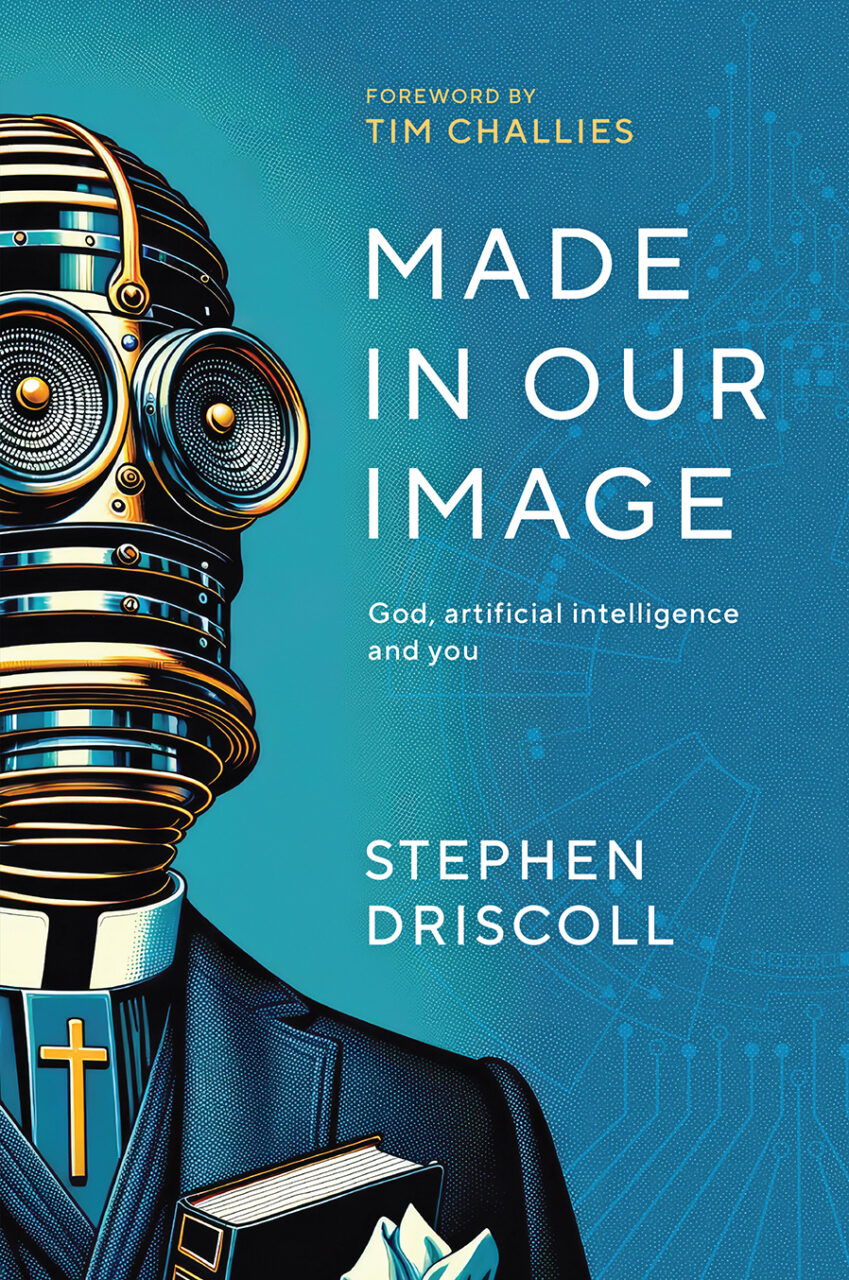
This review of Made in Our Image complements two others in Vol. 5 of CPOSAT: Michael Collie’s review and Charles Sherlock’s review.
Book reviewed by Daniel Lowe, May 2026
Made in Our Image: God, artificial intelligence and you
by Stephen Driscoll
Sydney: Matthias Media, 2024; 190 pages
ISBN 9781922980199, first edition, paperback
AU$20
This review is re-published here with kind permission of The Gippsland Anglican.
In Made in Our Image, Stephen Driscoll provides a thoughtful framework for Christians seeking to navigate the complex and rapidly evolving world of AI. Written for a broad audience, he offers a clear and engaging introduction to what AI is, how it works, and what it might become. The first two chapters form a technically robust yet accessible guide for the lay reader, offering just enough nuance to keep the more technologically literate engaged.
The rest of the book turns to a Christian perspective on AI, framed by the familiar biblical pattern of creation, sin, the cross, and the new creation. This structure anchors a fast-moving and sometimes bewildering topic within the grand narrative of God’s work in creation and redemption. It reminds readers that our use of new technologies does not stand outside God’s sovereignty but belongs within the same moral and spiritual universe as all human endeavour. It’s a simple yet effective approach, allowing the challenges of AI to be viewed within a much broader understanding of human creativity and responsibility.
The Creation chapter tackles the question of identity, and I think this is a helpful place to start. As AI becomes more adept at imitating human thinking, questions about what it means to be human and what is unique about humanity have been thrust to the forefront of public discourse. One of the biggest fears (or hopes, for some) is that AI might one day supersede humans and leave us as, at best, second-rate citizens and, at worst, redundant organisms to be enslaved or destroyed. Driscoll concludes with the reminder, “I know computers lack the thing that makes us so special: they lack the Spirit of God,” a line that beautifully captures his confidence in the enduring distinctiveness of human beings made in God’s image.
Having laid some important groundwork, the next chapter, titled “Less Dead Than the Others—Sin and Artificial Intelligence,” is, in my view, the book’s strongest. Here, Driscoll leans into the idea that humanity can use tools such as AI for good or ill, reminding us of our fallen nature and proclivity to misuse the tools we make, as well as the amazing blessing that wise use of tools can be for humankind. “AI increases the power of the human race to both create and to destroy. Because of sin, we know in advance that AI will be used in evil ways” (p. 91). If there is a missed opportunity here, it lies in the absence of a more explicit theology of tools as applied to AI. The concept is certainly implied as Driscoll treats AI as an instrument shaped by human purpose. But a fuller exploration could have deepened the book’s theological contribution. Even so, it remains an excellent and thought-provoking chapter.
The following chapters, which address the Cross and the New Creation, are less compelling. Driscoll’s aim may have been to end with an accessible, gospel-centred reflection, but these sections feel more like an evangelistic presentation illustrated by AI anecdotes than a continued theological engagement with technology. The framework that initially served the discussion so well begins to overshadow it, leaving AI as a colourful backdrop rather than the central conversation partner.
Despite my criticism of the final chapters, I would heartily recommend Made in Our Image to any Christian who is trying to come to grips with the emerging world of AI and is looking for a great place to start. Driscoll’s writing is engaging and accessible, with minimal use of jargon (both technical and theological) and contains just enough humour to keep the reader entertained. In a marketplace saturated with technology and speculation, this is a welcome addition to the conversation.